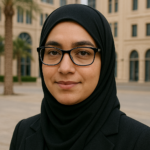
The healthcare landscape in the Gulf region is rapidly evolving, driven by substantial investments in infrastructure and an increasing need for innovative, accessible diagnostic solutions. Healthcare systems across eight cluster markets — Bahrain, Iraq, Maldives, Oman, Qatar, Palestine, Syria, and Yemen — encounter various challenges, such as early disease detection and decentralized care. In response to this growth, Roche Diagnostics Middle East is enhancing its leadership team with Sylvie Demirdjian stepping into the position of Gulf & Channel Partner Network Lead, effective August 1.
For Demirdjian, who joined Roche in 2004, this new role signifies not only a key personal achievement but also a strategic commitment from the company to local leadership.
“I am genuinely inspired to be part of Roche and feel proud of my journey here,” she stated. “Since I began in 2004, I have had the chance to grow, embrace new challenges, and manage diverse teams across various markets, from Lebanon to France, and now leading multiple markets as Gulf & Channel Partner Network Lead. Each experience has equipped me with fresh insights, enhanced resilience, and a deeper understanding of how to cultivate teams and partnerships that make a tangible difference.”
Enhancing Presence in Developing Markets
The Gulf region stands as a crucial area for growth for Roche Diagnostics, bolstered by extensive healthcare transformation initiatives, investments in medical infrastructure, and national strategies that prioritize early detection and preventive healthcare.
“The Gulf and Partner markets represent a thrilling area for Roche, marked by a rising demand for high-quality, accessible diagnostic solutions,” Demirdjian indicated. “My aim is to guarantee that individuals across the region can access high-quality, innovative diagnostics quickly and equitably.”
Her immediate objectives involve engaging with stakeholders across the eight cluster countries, strengthening local partnerships, and nurturing local talent. “Only through robust local engagement can we perform effectively in such a diverse and dynamic environment,” she emphasized.
As part of Roche’s regional leadership team, Demirdjian will also advocate for these markets in larger forums like EMEA-LATAM, ensuring that local needs are represented in the global strategy.
A Vision for Long-Term Partnerships
Roche’s long-term outlook for the Gulf emphasizes the creation of sustainable and adaptable partner networks that can meet evolving healthcare challenges.
“At Roche, we prioritize ‘doing now what patients need next’; hence, our strategy is firmly based on establishing trusted, sustainable partnerships that can evolve with the changing requirements of the healthcare systems in these countries,” she affirmed.
Demirdjian highlighted that Roche’s approach extends beyond mere short-term transactions. “We are dedicated to generating lasting value, investing in our partners’ strengths, aligning closely with market priorities, and ensuring that we can respond swiftly to what patients need next together.”
By enhancing collaborations with governments, healthcare leaders, and pharmaceutical partners, Roche seeks to fortify health systems to ensure ongoing access to diagnostics.
Innovation Central to Healthcare Delivery
The markets in the Gulf are on the brink of an extraordinary surge in innovation. Roche is set to introduce its highest number of new products in the Middle East by 2025.
“The year 2025 will see the launch of the most innovative products in the Middle East, underlining our commitment to advancing healthcare in the Gulf,” Demirdjian remarked.
A significant focus is on decentralizing diagnostics through near-patient care solutions, which lessen dependence on central laboratories and bring testing nearer to patients. The integration of LumiraDx into Roche’s offerings has marked a major milestone, enhancing rapid testing capabilities for a spectrum of conditions, from infectious diseases to non-communicable illnesses.
“This translates to quicker, evidence-based clinical decisions that can reach more patients and enhance efficiency in healthcare systems,” Demirdjian explained.
Such solutions align with national strategies. For instance, in Qatar, Roche has partnered with health authorities under Qatar National Vision 2030 and the National Health Strategy to incorporate evidence-based diagnostics into healthcare frameworks.
Confronting Challenges in Iraq
In Iraq, where the healthcare infrastructure is under significant pressure, Roche has renewed its strategic alliance with the Ministry of Health to broaden access to diagnostics.
“The Iraqi healthcare system grapples with unique challenges, notably limited access to services in more rural areas,” Demirdjian noted.
Collaborative projects under this partnership encompass digital transformation initiatives, enhanced diagnostic capabilities, and public health education campaigns aimed at early detection. “Agreements like these underscore the ongoing educational initiatives to raise awareness of the importance of early disease detection — crucial for improving treatment outcomes,” she added.
Collaboration as a Catalyst for Resilience
“Collaboration is integral to Roche’s identity — in the Middle East, we are building on over 60 years of collaborative legacy to drive innovation in the region,” Demirdjian stated.
Public-private partnerships (PPPs) are pivotal to Roche’s methodology. By aligning with national healthcare strategies and directly engaging with ministries, Roche co-develops programs aimed at early detection, digital transformation, and laboratory infrastructure enhancements.
“These collaborations also reinforce healthcare systems’ resilience and adaptability. By working with innovators from both public and private sectors, we can pilot new technologies, share best practices, and scale up quickly when effective solutions emerge,” Demirdjian articulated.
Diagnostics as the Cornerstone of Prevention
Throughout the Gulf, preventive care is a top national focus, and diagnostics serve as a foundational element.
“Diagnostics are essential for preventive healthcare — early intervention is impossible without early detection,” emphasized Demirdjian.
One significant initiative is Roche’s collaboration in Qatar, where Accu-Chek devices are integrated into school health clinics and connected to local health centers, assisting the Primary Health Care Corporation (PHCC) in managing diabetes among schoolchildren.
“This initiative enables effective screening and ongoing monitoring of diagnosed students, providing authorities a complete overview and equipping caregivers with the necessary tools to manage the condition proactively,” she elaborated.
Enhancing Capacity Through Partner Training
Roche views the readiness of its partner network as critical to the success of innovation.
“We consider our partners as extensions of Roche, thus empowering them to deliver innovation is a top priority,” Demirdjian remarked.
Training programs encompass technical expertise for lab technicians and healthcare professionals, as well as capacity-building across marketing, regulatory, and market access areas. “By bolstering technical knowledge and practical skills, we ensure that when new solutions are launched, they can be implemented efficiently from day one,” she stated.
Future Perspectives: Purpose and Progress
Demirdjian envisions the Gulf as one of the most ambitious healthcare markets worldwide, fueled by solid governmental investment in transformation and innovation.
“The Gulf region is a dynamic market actively investing in healthcare transformation — and Roche is ideally positioned to be a driving force in this change,” she stated.
Looking ahead, Roche plans to scale up decentralized testing, enhance early detection for both chronic and infectious diseases, and incorporate AI-driven diagnostics into operations.
“What excites me most is merging our innovation pipeline with our commitment to equitable healthcare access for patients in our partner network, delivering tangible improvements in patient care,” Demirdjian concluded.
For her, the essence of the role is clear: “Our collective efforts remain focused on what truly matters: delivering lasting value and better outcomes for patients.”