Titanium Escrow, a provider of regulated escrow and custody services based in Abu Dhabi, has recently achieved a remarkable milestone of over $5 billion in secured transactions, coinciding with its fifth anniversary. This growth highlights the increasing demand for advanced corporate payment solutions in the Middle East, particularly for intricate cross-border transactions.
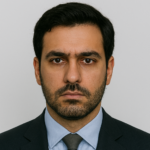
Since its inception in 2020, Titanium Escrow has facilitated nearly 500 transactions, encompassing a wide range of domains including mergers and acquisitions, private equity, real estate, and infrastructure projects. The company operates under the oversight of the Financial Services Regulatory Authority (FSRA) within the Abu Dhabi Global Market (ADGM) and was among the initial participants in ADGM’s RegLab innovation sandbox, leading to the development of the region’s first supervised escrow licensing. In this interview, CEO Ibrahim Kamalmaz shares insights on the company’s achievements, operations, and M&A trends in the area.
Titanium Escrow has achieved a significant milestone of over $5bn in secured transactions on its fifth anniversary. What does this signify about the development of sophisticated corporate payment systems in the Middle East
This achievement reflects more than just the $5 billion figure; it represents nearly 500 completed transactions. These transactions extend beyond M&A; they include real estate closings, post-liquidation distributions, and secondary sales of shares in growth-oriented startups.
The unifying element across these transactions is the role of a neutral third party holding funds with clear and enforceable release mechanisms, ranging from transactions below $2 million to larger cross-border assignments worth several eight figures. A substantial portion of the total is linked to M&A deals, while the remainder involves various other types of escrow activities.
A significant factor contributing to this success is the ADGM’s regulations, which offer an English common law framework along with its own courts and arbitration facilities, ensuring contractual certainty for international stakeholders; the enforceability of agreements remains subject to the specific legal jurisdictions.
This, in conjunction with FSRA regulation, adequate liquidity levels in local banks, and swift execution timelines, creates a conducive environment for executing both large strategic transactions and smaller deals that play a vital role in GCC M&A activity.
The firm has facilitated over Dhs1bn in transactions for acquisitions across crucial sectors like education, healthcare, and telecommunications in 2025. What is the broader importance of facilitating such social infrastructure investments in the region
These sectors are integral to the GCC’s diversification strategy. Education and healthcare provide tangible social advantages, while telecommunications, particularly digital infrastructure, is essential for supporting growth sectors such as AI, fintech, and cloud computing.
We collaborate with a diverse array of partners—from family-owned businesses seeking to professionalize to private equity funds expanding their portfolios and sovereign-linked investors pursuing strategic asset acquisitions. A number of these transactions involve cross-border participants, necessitating the structuring of escrow in multiple currencies—Dhs, USD, EUR, SAR, and GBP—and facilitating seamless fund transfers between jurisdictions.
Our operational approach is designed for efficiency. Risk-based KYC processes are typically completed within a business day, with expedited timelines achievable when public disclosures are adequate, although enhanced due diligence may take longer.
When conditions are satisfied, we disburse funds on the same business day, subject to banking cut-offs and compliance checks. This certainty is as crucial for a $2 million edtech acquisition as it is for larger infrastructure projects.
While M&A transactions constitute a significant portion of our business, our escrow services also enable real estate transactions, post-liquidation distributions, and secondary share transfers, which are similarly susceptible to execution risks and benefit from structured release protocols.
According to EY, M&A activity in MENA experienced a 50% increase in deal value in 2024. What do you think are the driving forces behind this trend
This upward trend can be attributed to two primary factors: favorable demographics and reform initiatives. In 2024, Dubai’s population increased by 4.5%, while Abu Dhabi’s rose by 7.5%, resulting in sustained demand across housing, healthcare, education, and consumer markets.
Simultaneously, reforms such as easing foreign ownership restrictions and strengthening investor protections have established the UAE as a leading destination for investment activity.
We facilitate opportunities across the continuum—from $2 million early-stage acquisitions to structured non-M&A assignments and complex multi-tranche cross-border deals. Our agreements are customized to fit varying deal complexities, with our onboarding process typically faster than conventional bank escrow services.
In one instance, we served as the escrow agent in the sale of a Category 1 depositing taking bank, conducted via an auction process with multiple international bidders, necessitating specialized non-bank escrow capabilities to meet regulatory requirements and timelines.
We designed the escrow process to align with transaction needs and the auction schedule—allowing the seller to close the deal with the winning bidder without unnecessary delays.
For transactions below $100 million, which are prevalent in the GCC market, the ability to combine regulatory adherence, quick onboarding, and multi-currency facilitation often differentiates successful deal closures from stalled negotiations.
What benefits does ADGM provide that have contributed to this shift away from traditional financial hubs like London or New York
With a 15-year background in UAE banking and financial markets, I’ve had the privilege of observing a transformative era for the region, attracting global talent. The UAE’s advantages—including government revenues, public safety, a favorable tax regime, and geographic centrality—position it as an outstanding international business center. Abu Dhabi’s diversification strategies into alternative sectors have rightly earned it the title of ‘the capital of capital’.
ADGM stands out with its progressive regulatory stance on fintech solutions, such as digital assets, combined with an English common law framework, benefiting from the UAE’s status as a global hub. Investors enjoy reliable contractual assurances through ADGM’s legal system, all while being in a dynamic market that continues to expand.
We took part in ADGM’s RegLab sandbox to develop a regulated digital escrow model, enabling us to implement escrow services within a controlled framework. For clients, this means quicker settlements, reduced administrative burdens, and increased transparency, even for complex cross-border and multi-currency transactions.
We strive to minimize friction in the process: clients often report that we facilitate onboarding faster than traditional bank escrow divisions, often several days sooner. Our extended hours for senior decision-makers and streamlined agreement finalization help counterparties transition smoothly from signing to funding without unnecessary review delays. We remain a neutral entity and do not provide legal advice; clients are encouraged to seek independent counsel.
Read: Middle East M&A activity rises 19% in H1 ’25, shows PwC report
Looking forward, what key trends do you foresee in the regional deal landscape
I anticipate three prominent shifts. Firstly, increased intra-GCC consolidation, especially among family-run businesses in sectors such as food and beverage, healthcare, and logistics. Secondly, continued activity in technology sectors—AI, fintech, and digital infrastructure—primarily within the sub-$100 million range. Lastly, growth in cross-border renewable projects and a more vibrant secondary market for scaling companies.
To navigate the increasing complexity of transactions, we must move beyond a traditional escrow model. Our value proposition is centered on an advisory-based approach, leveraging our expertise to craft tailored solutions that cater to the specific demands of each deal. Our agility is crucial, as we provide swift responses to comments on escrow agreements and a streamlined KYC process that alleviates common pain points.
For instance, in transactions involving multiple considerations, we can establish customized deposit and release instructions tied to specific parameters. Clients require agility in these intricate and rapidly evolving deals, and we provide direct access to senior decision-makers, helping them circumvent the red tape often found in larger organizations.
This combination of robust security and personalized service primes us for the next phase of deal-making in the region.