Image: Supplied
Today, investors aim for more than mere financial gains; they aspire for their investments to align with their personal values. The global emphasis on sustainable and ESG investing is notable, yet in the Middle East, the focus on Islamic or Sharia-compliant investments is rapidly increasing.
Both investment strategies seek to intertwine finance with ethical considerations, but Islamic investing introduces added complexities due to its strict adherence to Sharia principles throughout the entire investment framework.
Habib Bank AG Zurich, which has long operated as a conventional financial institution, views this trend as a significant opportunity. The rising demand for Sharia-compliant investment options among its clientele has led the bank to create a well-structured service that emphasizes discretionary portfolio management while being guided by external Sharia consultants and Swiss best practices.
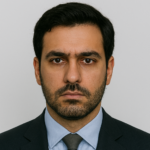
To gain insights into the bank’s strategy, challenges, and the evolution of Islamic investing in the region, we spoke with Dr. David Wartenweiler, the Chief Investment Officer at Habib Bank AG Zurich. Here are the key highlights from our discussion.
What trends are emerging among investors regarding purpose-driven portfolios?
Today’s investors often desire more than just financial returns. There is a growing demand for investments that resonate with their ethical beliefs, similar to the global shift towards sustainable and ESG investing. In our area, Sharia-compliant investing is appealing to a larger audience. While both strategies connect finance with values, Islamic investing involves more rigorous implementation.
Why has Islamic investing been largely constrained within traditional banks?
The necessity for strict Sharia adherence across most aspects of the investment process makes Islamic investing unique. Conventional banks frequently struggle to guarantee complete integrity and transparency, leading to a market mostly dominated by specialized Islamic banks and asset management firms. Many traditional private banks have opted against entering this market due to the inherent complexities.
How is Habib Bank addressing these complexities?
As a conventional banking entity, it was essential for us to guarantee total compliance with Islamic finance principles at every phase. Our credibility hinges on being transparent with clients, outlining what we can and cannot do. We enlisted an external Sharia consultant to review and approve our operations and secured a Fatwa to ensure our processes meet the required standards. Focusing on discretionary portfolio management enables us to maintain comprehensive control over the investment value chain.
What modifications have you implemented in your processes for Islamic investments?
We have created dedicated processes for management agreements, investment procedures, and separate custody for all discretionary Islamic investment portfolios. Certain conventional banking functionalities have been disabled to uphold stringent compliance and integrity consistently.
How do you go about selecting investment assets for Islamic portfolios?
Not all Islamic assets are deemed appropriate for investment management. We concentrate on liquid instruments such as sukuk and equities, both individually and in Sharia-compliant collective investments. Each asset is rigorously assessed against our financial criteria and must align with Sharia standards. Our external advisor serves as the final authority to prevent conflicts of interest, and regular assessments ensure that assets are replaced if they no longer meet the criteria.
How do you maintain Sharia compliance while aiming for competitive returns?
The primary objective is to provide optimal returns for our clients. Nevertheless, every investment decision is strictly confined within the Islamic framework. By integrating Swiss best practices with Sharia oversight, we can ensure that portfolios are both ethically sound and financially viable.
Read: Habib Bank AG Zurich: Strategies for generational wealth transfer