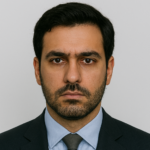
Korean Transport Minister Park Sang-woo, right, and Kim Young-tae, center, secretary general of the International Transport Forum (ITF), are attending the 2025 ITF Summit in Leipzig, Germany, on May 21. [YONHAP]
According to South Korea’s transport minister, a local consortium possesses a significant edge in technology transfer over its Chinese counterpart while competing for a high-speed railway project in the United Arab Emirates (UAE), which has an estimated budget of $13.6 billion.
Transport Minister Park Sang-woo announced Wednesday that the Korean consortium, which includes the Korea National Railway, Korail, Hyundai Rotem, and Posco E&C, has successfully completed the prequalification stage to participate in the official bidding for the railway project in the Middle Eastern nation.
Park is currently representing Korea at the three-day International Transport Forum (ITF) Summit taking place in Leipzig.
“Our main emphasis is on technology transfer in addition to product quality, while it seems that China is concentrating more on pricing,” Park stated.
Earlier this year, the UAE initiated two separate bidding processes for the construction of the roadbed and railway vehicles. The objective is to establish a new 150-kilometer (93-mile) high-speed train line connecting Abu Dhabi and Dubai, with plans to commence operations by 2030.
The minister highlighted three essential factors for securing overseas construction contracts: competitive pricing, localization capabilities, and the ability to complete projects on schedule.
Park emphasized that Korea’s strengths compared to other bidders include localization and timely project delivery, along with its technology transfer capabilities.
Successfully securing the UAE contract could further bolster Korea’s presence in the international construction sector, especially as Seoul has proposed a European high-speed railway model to the UAE.
Countries such as Vietnam, Egypt, and Peru are reportedly also seeking to launch their high-speed railway initiatives in the near future.
In February, Hyundai Rotem secured a 2.2 trillion-won ($1.6 billion) deal with Morocco for the supply of advanced trains. Last year, it also finalized a 270 billion won contract to provide high-speed trains to Uzbekistan.
Furthermore, the minister indicated that Korea is committed to developing hydrogen-powered trains in response to the global push for decarbonizing the transportation sector.
Earlier this month, the Ministry of Land, Infrastructure, and Transport in Seoul unveiled a plan to create and commercialize hydrogen-fueled trains by 2028, aiming to position the domestic industry as a global leader in this technology.
The projected market value for hydrogen trains globally is expected to rise from $2.67 billion currently to $26.4 billion by 2035, as reported by the ministry.
Yonhap