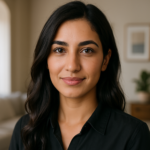
Image source: Provided/Gulf Business
The Gulf Business panel, which took place on June 25, 2025, at the Metropolitan Hotel in Dubai, assembled a distinguished group of industry experts to discuss critical issues that will influence the future of finance and investment in the region.
Dubai records 8.68 million international visitors in the first five months of 2025
The event addressed several important topics, ranging from the increasing interest in residence-by-investment programs, often referred to as “golden visas,” to the shifting landscape for UAE initial public offerings (IPOs) in the near future. Additionally, the discussion centered on the world’s largest transfer of generational wealth and its anticipated effect on investment strategies not only in the UAE but in global markets as well.
Each session was carefully organized, providing valuable insights from prominent figures in investment, banking, and business formation.
Notable speakers included:
- Damian Hitchen, CEO of Saxo Bank MENA
- Muhammed Hassan, Capital Markets Leader at PwC
- Yasmine Omari, Head of Wealth Planning at Bank of Singapore
- George Hojeige, Group CEO of Virtugroup
- Yogesh Khairajani, Global Market Strategist at Century Financial
The insights shared by these experts provided attendees with a deep understanding of emerging financial trends and practical strategies for navigating the changing economic landscape.
As both global and regional conditions evolve, the Gulf Business panel emphasized the UAE’s role as a key hub for innovative investment and long-term planning for growth.
Panel Discussion 1: Global Mobility & Residence by Investment
Topic: Geopolitical shifts influencing citizenship and relocation strategies
Moderator: Claire Vuylsteke, Director, Orbcom
Speakers:
- George Hojeige, Group CEO, Virtugroup
- Rahul Singh, Managing Director, Thrifty & Dollar Car Rental
- Sanjay Sachdev, Group Marketing Director at Leptos Estates Greece and Cyprus
- Vishwajit Patil, Senior Executive Officer (SEO) for Nuvama Private DIFC
Key discussion points:
- Residence-by-investment opportunities for high-net-worth individuals (HNWIs) in the UAE
- Global mobility trends in an unpredictable environment
- Strategic planning for personal and capital protection
Panel Discussion 2: Outlook for UAE IPOs in 2025 and Beyond
Topic: Future developments in the UAE capital markets and opportunities for investors
Moderator: Nigel Sillitoe, CEO of Insight Discovery
Speakers:
- Yogesh Khairajani, Global Market Strategist, Century Financial
- Manasvi Ghelani, Associate Director, Customer Engagement, Frost & Sullivan
- Muhammed Hassan, Capital Markets Leader at PwC
Key discussion points:
- The upcoming wave of public offerings
- Market preparedness compared to global exchanges
- Influences of macroeconomic factors such as interest rates and trade tariffs
Panel Discussion 3: Impact of Capital Shift on Investment Strategies in the UAE
Moderator: Karishma Hingorani, Founder & Podcaster, Karishma Konnect
Speakers:
- Damian Hitchen, CEO of Saxo Bank MENA
- Yasmine Omari, Head of Wealth Planning, Bank of Singapore
- Gemma Wild, Head of Global Collaboration, MENA GPB, HSBC
- Dave Chaggar, Sales Director, Capital Club Limited
Key discussion points:
- Trillions in movement: Understanding the wealth transfer and its implications
- Shifts toward digital-native investment priorities
- Importance of succession planning, private banking, and wealth technology in the UAE
Business exits are often seen as the pinnacle of entrepreneurial achievement; however, the reality is often more complicated than it appears. Factors such as cultural conflicts, diverging goals, and the inherent pressures of investor relationships indicate that exits are not merely exits but rather a transition. At the Gulf Business panel, George Hojeige from Virtugroup highlighted the misconception of “easy money” and stressed that selecting the right partners is crucial.
Dubai continues to establish itself as a hub for global wealth and IPO activity, paving the way for a new phase in capital flow, family investment strategies, and entrepreneurial evolution.
The Realities Behind Business Exits
Investors are more than just passive participants—they get deeply involved in the business process.
“No one gives you money without asking questions regarding your plans and future outlook. There is no such thing as free money,” stated George Hojeige, Group CEO of Virtugroup, during a keynote at the Gulf Business panel event.
A lack of alignment in vision or values can jeopardize even the most robust companies. “No matter the amount of capital available, if the vision is not shared, you’re destined for failure from day one,” Hojeige remarked.
He referenced Microsoft’s acquisition of Nokia in 2014 as a cautionary example. “It seemed like an ideal merger—two powerhouses coming together. Yet, their cultures conflicted, with Microsoft being agile and innovation-focused while Nokia adhered to traditional processes. This misalignment resulted in significant layoffs and a collapsed merger.”
The takeaway for investors is clear: an exit goes beyond a mere transaction; it is a process of transformation.
“Choose partners carefully; it’s not solely about financing. Shared goals, corporate culture, and a united vision for the future are essential. Getting this wrong will negate any financial benefits.”
UAE Continues to Lead in the Global Investment Landscape
As jurisdictions worldwide strive to create the most favorable conditions for businesses, entrepreneurs, and those seeking relocation, the UAE has distinguished itself, particularly after the introduction of the Golden Visa, making it an attractive center for business operations and investment.
That said, global competitors are enhancing their offerings to attract talent and capital, urging the UAE to keep its competitive edge while fostering innovation.
Dubai Becomes a Hub for Family Offices
Dubai is increasingly recognized as a top destination for global wealth management and family office services. Vishwajit Patil, Senior Executive Officer at Nuvama Private DIFC, attributes this trend to the city’s prime location, efficient frameworks, and conducive regulatory environment, which attract affluent families worldwide.
Speaking during a morning panel discussion, Patil mentioned that Nuvama Private began operations in Dubai in August 2024 and has found the experience exhilarating. “Our management strategy reflects the rising significance of the region in managing financial strategies and tax-related concerns for international clientele,” he stated.
When choosing a relocation destination, clients consider five essential factors:
- Geopolitical stability
- Healthcare and educational infrastructure
- Cost of living and lifestyle
- Strategic location and connectivity
- Ease of business setup and residency options
“Dubai excels in all these aspects,” Patil noted. “From the efficiency of the Golden Visa scheme to access premium healthcare and education, along with rapid government processes — the UAE delivers unparalleled service and expediency.”
UAE IPO Landscape: Looking Ahead to 2025
An Initial Public Offering (IPO) is characterized by a private company selling shares publicly for the first time, marking a crucial milestone for the business and involving various stakeholders including company leadership, regulatory bodies, investment bankers, legal advisors, and both institutional and retail investors.
A notable development in the UAE capital markets is the rise of funds dedicated to IPO investments. These funds grant retail investors the opportunity to engage in a diverse range of IPOs instead of investing in individual companies.
“IPO funds have emerged as a formidable resource for investors,” elucidated Yogesh Khairajani, Global Market Strategist at Century Financial. “These funds are particularly valuable during oversubscribed IPO events,” a situation common in the UAE, allowing investors to still tap into promising public offerings.
An example of this trend is the Abu Dhabi IPO Fund, which has garnered substantial attention from both institutional and retail investors.
“The Abu Dhabi IPO Fund simplifies participation in various new listings,” Khairajani remarked. “It alleviates the difficulty of choosing a single company, enabling individuals to leverage the fund manager’s expertise in identifying high-potential IPOs, leading to a more diversified portfolio.”
Transformations in Family Investment Strategies
During the panel entitled “How the World’s Largest Shift in Capital is Reshaping Investment Strategies in the UAE and Beyond,” Yasmine Omari, Head of Wealth Planning at Bank of Singapore, shed light on evolving patterns in how families are managing their wealth.
“I’ve observed a significant transformation in family investment approaches,” Omari remarked. “This involves not just a generational transition but a shift in methodologies, strategies, and overall mindset.”
She cited several factors contributing to this shift, including enhanced diversification across assets, increased sophistication, and a move toward institutional-style investing. According to Omari, numerous families are evolving beyond merely reinvesting profits from their operational ventures. Instead, they leverage those businesses as avenues for broader investment activities.
“Some families have established internal investment teams or created mini family-owned funds, implementing structures and professional governance,” she noted. “In several cases, they’ve even initiated separate businesses that focus solely on investment or technology.”
As these initiatives expand, Omari emphasized the significance of governance and structure. This transition impacts not merely capital allocation but also how decisions are made.
“In the past, decisions might have primarily been made by the founder and a handful of close relatives, but now multiple generations across various branches participate,” she explained. “That raises the importance of effective communication, governance, and consensus-building.”