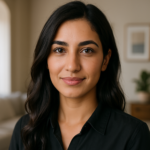
Adrian Hayes, a British explorer, writer, and leadership coach at 66 years old, has recently completed a daunting expedition to Kanchenjunga, the third-highest mountain globally.
Renowned for conquering some of the planet’s most challenging terrains, including K2, the North and South Poles, and traversing Greenland and the Empty Quarter, Hayes confronted one of his most significant challenges yet on the 8,586-meter Himalayan peak in May.
Following his successful summit, he exhausted his oxygen supply, suffered a hand injury, experienced frostbite, and was ultimately left behind in an area climbers refer to as the “death zone.”
In a conversation with the podcast Situation Today, he shares insights from this intense experience, along with the mental and physical resilience required, and how these lessons from extreme environments can apply to today’s leadership and business landscapes.
Watch the complete interview here:
An edited excerpt from the interview is provided below.
What motivated you to undertake the Kanchenjunga challenge?
Kanchenjunga, being the third-highest peak, is nearly as steep as K2 but spans twice the distance, featuring the longest ascent from the high camp to the summit of any mountain. Its harsh conditions make it lethal, not primarily due to avalanches but because of the risks of exhaustion and exposure.
Located on the eastern border of Nepal and Sikkim, near Tibet, I have a personal connection to this area from my time with the Gurkha Regiment, where I recruited local talent. I had first seen the mountain three decades ago and vowed, “One day, I will climb it.”
I have been on adventures since I was 17, driven by experiences, personal growth, and the pursuit of excellence. After a seven-year hiatus dedicated to raising my daughter—one of my greatest challenges—I resumed my adventures. We attempted Kanchenjunga last year but didn’t reach the summit; this year marked our second effort.
Mountaineering seems to have evolved significantly over the years. Do you believe it has become overly commercialized or focused on attention?
Absolutely. Nowadays, most expeditions are guided by Sherpas, and the influence of social media has turned it into a performance. Climbers are eager to showcase their achievements; running a marathon is no longer sufficient; now it’s about ultra-marathons in the mountains.
Everest has transformed into a spectacle, with records for the youngest, the fastest, or the first climbers from specific countries. This shift was particularly pronounced after Nirmal Purja ascended all 14 peaks over 8,000 meters, leading to a Netflix documentary that shifted the focus to quick ascents and record-breaking attempts.
We need to return to the fundamental reasons for these pursuits: for the experience, the solitude, and the clarity it brings. This doesn’t have to be limited to the Himalayas; the mountains in the UAE are just as beautiful, and I enjoy exploring them each winter weekend.
Can you describe your summit attempt? Was it a solo endeavor or a team effort?
There were eight climbers and eight Sherpas during the summit attempt. My previous acclimatization trips were either solo or with a partner. By the time we made our summit bid, only five climbers remained, and the conditions were far from ideal; everything felt hurried.
We departed the lower camp at 6:30 PM on May 10 and reached the summit at 2:30 PM the next day, taking 20 hours. I ran out of oxygen during the ascent because my Sherpa fell behind, and for a while, I led the way. I eventually got oxygen replenished and managed to summit, but I was dehydrated.
READ MORE: Peak performance: Adventurer and business coach Adrian Hayes
How long can one realistically survive without sufficient oxygen?
Not for long. If you’re accustomed to using oxygen and it suddenly cuts off, it feels like turning off an electric car’s power; you just halt.
My Sherpa didn’t have much experience. He was a young guy, I don’t want to say anything harsh, but eventually, when I resumed oxygen, we arrived at the summit amidst terrible weather. We snapped a quick photo and video and began our descent.
That’s when you injured your hand, correct?
Indeed. During the descent, another climber stumbled and crashed into me, knocking me off a ledge. I was saved by a fixed rope, but my hand became trapped and injured in the process.
Navigating downward with one hand was tremendously challenging. We took three to four hours to descend just 200 meters. All the others returned to Camp 4 safely. Tragically, one woman from France passed away during the descent; it was her first climb over 8,000 meters.
Then, I ran out of oxygen again, which led to me experiencing HACE (high-altitude cerebral edema). I began to lose focus and behave irrationally. I instructed my Sherpa to leave me behind and started hallucinating, seeing visualizations of other climbers and lights that were non-existent. Eventually, I passed out at 8,300 meters.
What was the descent experience like?
The descent from 8,300 to roughly 7,700 meters took over a day. I took a wrong turn, slid down 30 meters, and hallucinated entire teams and villages. I spoke to people who weren’t there but kept pressing on.
Eventually, I fell again, but then I heard a voice. A Sherpa had come up with oxygen, clipped me in, provided a mask, and assisted me down to Camp 4. The following day, we made it to Camp 2, and I was airlifted from there.
I’m here today solely because I managed to make it low enough and because that Sherpa showed up to help me.
And you also dealt with frostbite?
Yes, on several fingers and my right foot. It’s recovering now, although one finger is still quite bad and my foot remains painful. But it’s a minor sacrifice. I’ve been told very few people have survived a solo descent like that from the death zone.
What drove you to persist through this ordeal?
Three elements: a sort of autopilot instinct to descend, my fitness level—being in peak physical condition, and belief. I’ve previously descended Everest without supplemental oxygen and undertaken substantial climbs, making it feel feasible.
I also completely blocked out all distractions. There was no fear, no panic, no thoughts of family, just a singular focus on getting down.
Some have wondered if I will experience PTSD; while I have relived the events, I feel no trauma—just a sense of gratitude for being alive.
You apply these experiences to your business coaching as well. How do these lessons influence your work?
For the past 20 years, I’ve provided coaching. More than just motivational speaking, I address topics like leadership, growth mindset, adaptability, risk, and resilience.
Resilience is particularly vital. Many executives express concern that their teams, especially younger members, lack resilience. We have been raised in a culture that is overly cautious, wrapped in protective layers. This has consequences.
We’re not empowering individuals to think critically; we are merely instructing them on what to think. The rise of smartphones and AI has led to a detachment from problem-solving skills. Many can’t even navigate without a GPS anymore.
However, life isn’t always easy. Challenges will arise. The more you push yourself, the better equipped you become.
What advice would you offer business leaders seeking to foster resilience within their teams?
Begin with establishing a healthy culture. Promote open feedback; it’s invaluable. Ensure your team is aligned in terms of work processes and desired culture.
Encourage a space where taking risks is welcomed, and mistakes are viewed as stepping stones for growth. Foster problem-solving skills and critical thinking and stimulate challenging discussions.
We need individuals who can think independently, question established norms, and communicate frankly. That is how you build resilience.
Looking ahead, what are your plans? Will you continue to climb?
This was my last climb of an 8,000-meter peak. I see no merit in pursuing all 14 of them again; that route is well-traveled.
However, I do intend to explore 7,000-meter peaks in Tibet, India, or Nepal. Not right away, perhaps next year.
It’s not about setting records anymore; it’s about seeking tranquility, immersing myself in nature, and rediscovering what matters. The mountains in locations like Hatta, Ras Al Khaimah, and Oman are also phenomenal.