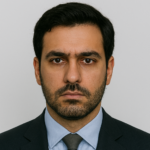
Image credit: Supplied/Gulf Business
The Gulf Business panel, which took place on June 25, 2025, at the Metropolitan Hotel Dubai, gathered a distinguished group of leaders from various sectors to discuss critical issues influencing the future of finance and investment in the region.
Dubai Welcomes 8.68 Million International Travelers in the First Five Months of 2025
The event investigated several essential topics, including the rising interest in residence-by-investment programs, often known as “golden visas,” and the prospects for UAE initial public offerings (IPOs) in 2025 and beyond. A significant focus was also placed on the worldwide generational wealth transfer and its anticipated effects on investment strategies in both the UAE and global markets.
Each session was well-planned, featuring valuable perspectives from top professionals in investment, banking, and business setup.
Notable speakers included:
- Damian Hitchen, CEO of Saxo Bank MENA
- Muhammed Hassan, leader in capital markets at PwC
- Yasmine Omari, head of wealth planning at Bank of Singapore
- George Hojeige, group CEO of Virtugroup
- Yogesh Khairajani, global market strategist at Century Financial
Their combined insights helped participants gain a broad understanding of emerging financial trends and practical strategies to navigate the changing economic environment.
As global and regional dynamics evolve, the Gulf Business panel reaffirmed the UAE’s role as a vital center for innovative investments and long-term growth strategies.
Panel Discussion 1: From the UAE to the World – Global Mobility & Residence by Investment
Topic: How Geopolitical Changes Are Altering Citizenship and Relocation Strategies
Moderator: Claire Vuylsteke, Director, Orbcom
Speakers:
- George Hojeige, Group CEO, Virtugroup
- Rahul Singh, Managing Director, Thrifty & Dollar Car Rental
- Sanjay Sachdev, Group Marketing Director at Leptos Estates Greece and Cyprus
- Vishwajit Patil, Senior Executive Officer (SEO) for Nuvama Private DIFC
Key Discussion Points:
- Investment-based residence options for high-net-worth individuals (HNWIs) in the UAE
- Trends in global mobility amidst uncertainties
- Planning for personal and capital security
Panel Discussion 2: UAE IPO Outlook: 2025 and Beyond
Topic: What Lies Ahead in the UAE’s Capital Markets and How Investors Can Benefit
Moderator: Nigel Sillitoe, CEO of Insight Discovery
Speakers:
- Yogesh Khairajani, Global Market Strategist, Century Financial
- Manasvi Ghelani, Associate Director – Customer Engagement, Frost & Sullivan
- Muhammed Hassan, Capital Markets Leader, PwC
Key Discussion Points:
- The upcoming wave of public listings
- Market preparedness versus global exchanges
- Effects of macroeconomic variables like interest rates and tariffs
Panel Discussion 3: The World’s Largest Capital Shift and Its Influence on Investment Strategies in the UAE and Beyond
Moderator: Karishma Hingorani, Founder & Podcaster, Karishma Konnect
Speakers:
- Damian Hitchen, CEO of Saxo Bank MENA
- Yasmine Omari, Head of Wealth Planning, Bank of Singapore
- Gemma Wild, Head of Global Collaboration, MENA GPB, HSBC
- Dave Chaggar, Sales Director, Capital Club Limited
Key Discussion Points:
- Trillions at stake: Understanding the greater wealth transfer and its implications
- The rise of digital-native investors and their changing priorities
- Succession planning, private banking, and wealth technology trends in the UAE
While successful business exits are often seen as the pinnacle of entrepreneurial achievement, the realities behind these transitions can be more nuanced. During the Gulf Business panel, George Hojeige of Virtugroup emphasized the importance of selecting the right partners, dispelling the notion of “easy money.”
Simultaneously, Dubai is establishing itself as a hub for global wealth and IPO activities, paving the way for a transformative phase in capital mobility and family investment approaches.
The Realities of Business Exits: The Complexity Behind the Success
Investors are not merely passive financial supporters; they engage deeply with the business.
“No one just hands over capital and walks away. They want to know how it will be utilized and your long-term vision. Free money is a myth,” noted George Hojeige during a keynote at the Gulf Business panel.
A disconnect in alignment of vision or values can derail even robust companies. “Regardless of the funding amount, a lack of shared vision is detrimental from the outset,” Hojeige warned.
He recounted Microsoft’s 2014 acquisition of Nokia as a cautionary example, where the anticipated synergy fell apart due to cultural clashes. “Microsoft was agile and innovative, while Nokia leaned toward traditional processes. The outcome was significant layoffs and a failed merger.”
The takeaway for entrepreneurs is that an exit is more than just a financial transaction; it involves a transformation.
“Choose your partner wisely. It’s not merely about financial backing; it’s crucial to share objectives, culture, and future aspirations. Misalignment in these areas cannot be rectified merely through funding,” he concluded.
The UAE’s Competitive Edge in Global Investment Landscape and Quality of Life
Jurisdictions worldwide are competing to attract businesses, entrepreneurs, and individuals seeking relocation. The UAE, particularly following the launch of the Golden Visa, has emerged as a strong contender for business operations and investment.
However, other regions are also stepping up their offerings, compelling the UAE to continuously attract both local and international clientele through competitiveness and forward-thinking strategies.
Dubai Becomes a Hub for Global Family Offices
As Dubai establishes itself as a prime destination for global wealth management and family office services, Vishwajit Patil of Nuvama Private DIFC, attributes its attractiveness to its strategic geopolitical position, effective infrastructure, and supportive regulatory framework.
In a morning panel discussion, Patil noted the firm’s recent expansion into the UAE, stating, “We launched our Dubai operations in August 2024, and it has been an exciting journey. Our management strategy highlights the region’s increasing significance in catering to global clients, particularly in financial strategy and tax planning.”
When assessing relocation possibilities, clients typically focus on five main factors:
- Political stability
- Healthcare and educational infrastructure
- Living expenses and lifestyle quality
- Strategic positioning and connectivity
- Simplicity in business establishment and residency options
“In all areas, Dubai excels,” Patil emphasized. “Whether it’s the efficiency of the Golden Visa process, superior healthcare and education access, or the agility of government procedures, the UAE offers an unmatched service level.”
Prospects for UAE IPOs: 2025 and Beyond
An Initial Public Offering (IPO) is the process by which a private entity sells its shares to the public for the first time, representing a crucial milestone for any organization and involving various stakeholders, including company leadership, regulatory bodies, investment bankers, legal advisors, and both institutional and retail investors.
A notable trend in the UAE capital markets is the rise of IPO-targeted investment funds that enable retail investors to access a diverse portfolio of IPOs instead of selecting individual companies.
“IPO funds have proven to be a significant asset for investors,” explained Yogesh Khairajani, global market strategist at Century Financial. “These funds are especially beneficial in scenarios where IPOs experience oversubscription, a common occurrence in the UAE, allowing investors continued exposure to promising public offerings.”
One prominent initiative is the Abu Dhabi IPO Fund, which has captured considerable interest from both institutional and individual investors.
“The Abu Dhabi IPO Fund simplifies the investment process across various new listings,” remarked Khairajani. “This minimizes the risk of having to choose a single company, allowing investors to leverage the fund manager’s expertise to target high-potential IPOs within a more diverse investment framework.”
Transformations in Family Investment Strategies
During a panel focused on “How the World’s Largest Shift in Capital is Reshaping Investment Strategies in the UAE and Beyond,” Yasmine Omari from the Bank of Singapore noted a remarkable shift in how families manage their capital.
“I have observed a notable evolution in family investment approaches,” Omari stated. “This goes beyond simple generational transitions; it’s a complete transformation in processes, strategies, and mindsets.”
She identified multiple factors driving this change, such as increased diversification across assets, enhanced sophistication, and a significant trend toward institutional-style investment. Omari noted that many families are moving beyond merely reinvesting profits from their businesses; they are now using these operations as vehicles for broader investment activities.
“Some families have established internal investment teams or even created small family-run funds that include governance structures and dedicated personnel,” she explained. “In some cases, they’ve even developed entirely separate ventures focused on investing or technology.”
As these initiatives advance, Omari emphasized the rising need for structured governance. The evolution encompasses not just capital allocation but also decision-making processes.
“Where once decisions may have solely been made by the founder and a few relatives, now multiple generations and branches of the family contribute, increasing the need for communication, governance, and consensus-building,” she clarified.