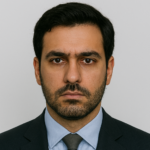
The healthcare landscape in the Gulf region is rapidly evolving, driven by significant investments in facilities and an increasing demand for innovative and accessible diagnostic solutions. In eight key markets—Bahrain, Iraq, Maldives, Oman, Qatar, Palestine, Syria, and Yemen—healthcare systems are confronted with varying obstacles, from the need for early diagnosis to the push for decentralized care. In response to this growth, Roche Diagnostics Middle East is enhancing its leadership roster, appointing Sylvie Demirdjian as the Gulf & Channel Partner Network Lead, starting August 1.
Demirdjian, who joined Roche in 2004, views this new role as both a personal achievement and a strategic commitment from the company to local leadership.
“I am genuinely motivated to be part of Roche and take great pride in my journey here,” she commented. “Since my start in 2004, I have had the chance to advance, embrace new challenges, and manage diverse teams across various markets, from Lebanon to France, and now across a collective of markets as Gulf & Channel Partner Network Lead. Every experience has equipped me with fresh insights, increased resilience, and a richer understanding of how to cultivate teams and collaborations that truly make a difference.”
Enhancing Presence in Expanding Markets
The Gulf represents a critical area for growth for Roche Diagnostics, bolstered by extensive healthcare transformation initiatives, investments in medical infrastructure, and national strategies prioritizing early detection and preventative care.
“The Gulf and Partner markets are an exhilarating growth sector for Roche, with an escalating demand for high-quality, accessible diagnostic solutions,” Demirdjian pointed out. “My aim is to ensure that individuals throughout the region have swift and equitable access to superior, innovative diagnostics.”
Her immediate focus is on interacting with stakeholders in the eight cluster nations, strengthening local alliances, and fostering local talent. “Only through robust local participation can we operate effectively in such a diverse and evolving environment,” she added.
Serving on Roche’s regional leadership team, Demirdjian will also advocate for these markets in broader discussions, such as EMEA-LATAM meetings, ensuring local needs influence global strategies.
A Vision for Long-Term Partnerships
Roche’s long-term strategy for the Gulf centers on creating sustainable and flexible partner networks that can tackle evolving healthcare challenges.
“At Roche, our motto is to ‘do now what patients need next’; this implies that our strategy is deeply rooted in establishing sustainable, trusted partnerships that can expand and adjust to the shifting demands of the healthcare systems in the region,” she commented.
Demirdjian underscored that Roche’s methodology transcends temporary transactions. “We consider long-term value creation essential by investing in our partners, aligning closely with market needs, and ensuring that we can promptly address patient demands together.”
Through collaboration with governments, healthcare leaders, and pharmaceutical partners, Roche aspires to fortify health systems so that they can consistently provide access to diagnostics.
Innovation Central to Healthcare Delivery
Gulf markets stand on the brink of unprecedented innovation. In 2025, Roche plans to introduce its highest number of new products in the Middle East.
“2025 will witness the launch of the greatest number of innovative products in the Middle East—an unmistakable indication of our dedication to advancing healthcare in the Gulf,” Demirdjian remarked.
A primary focus is on decentralizing diagnostics via near-patient care solutions, which lessen the dependency on centralized laboratories and bring testing closer to patients. The integration of LumiraDx into Roche’s offerings marks a significant achievement, enhancing rapid testing capabilities across a variety of conditions, from infectious diseases to chronic illnesses.
“This translates to faster, evidence-based clinical decisions that reach a larger patient population and promote efficiency within healthcare systems,” Demirdjian explained.
These solutions align with national strategies. For instance, in Qatar, Roche collaborates with health authorities under Qatar National Vision 2030 and the National Health Strategy to incorporate evidence-based diagnostics into the healthcare framework.
Tackling Unique Healthcare Challenges in Iraq
In Iraq, where the healthcare infrastructure is notably strained, Roche has renewed its strategic alliance with the Ministry of Health to enhance diagnostic accessibility.
“Iraq’s healthcare system faces distinct challenges, particularly limited access to services for more rural communities,” Demirdjian observed.
This partnership includes initiatives for digital transformation, improved diagnostic capabilities, and campaigns to promote public health education regarding early detection. “Agreements of this nature underscore the importance of educational initiatives to heighten awareness about early disease detection, which is vital for improving treatment results,” she added.
Driving Resilience Through Partnerships
“Partnership is ingrained in Roche’s identity—having a history of over 60 years of partnership in the Middle East to bring innovation to the region,” stated Demirdjian.
Public-private partnerships (PPPs) play a key role in Roche’s strategy. By aligning with national healthcare initiatives and collaborating directly with ministries, Roche is co-creating programs focused on early detection, digital advancement, and enhancing laboratory infrastructure.
“These collaborations also contribute to the resilience and adaptability of healthcare systems. By partnering with both public and private sector innovators, we can pilot new technologies, share best practices, and scale effective solutions rapidly,” Demirdjian explained.
Diagnostics as the Cornerstone of Prevention
Throughout the Gulf, preventive care is a national priority, with diagnostics serving as its foundation.
“Diagnostics are fundamental to preventive healthcare—you cannot intervene early if early detection is absent,” Demirdjian emphasized.
One notable collaboration is in Qatar, where Roche’s Accu-Chek devices are utilized in school health clinics and linked to health centers, assisting the Primary Health Care Corporation (PHCC) in managing diabetes among schoolchildren.
“This program aids the PHCC in diabetes management among schoolchildren by facilitating screening and continuous monitoring for diagnosed students, providing authorities with a comprehensive overview and equipping caregivers with essential tools for proactive management,” she explained.
Enhancing Capabilities Through Training
For Roche, the success of innovation hinges upon the preparedness of its partner network.
“We view our partners as extensions of Roche, so empowering them to deliver innovation is a priority,” Demirdjian stated.
Training initiatives encompass not only technical skills for lab technicians and healthcare professionals but also capacity-building across marketing, regulatory, and market access functions. “By enhancing technical expertise and practical skills, we ensure that new solutions can be effectively implemented and delivered from day one,” she said.
Looking Ahead: Purpose and Advancement
Demirdjian perceives the Gulf as one of the most dynamic healthcare markets globally, bolstered by strong governmental investments in transformation and innovation.
“The Gulf region is an ambitious market actively investing in healthcare transformation—and Roche is well-positioned to catalyze that change,” she noted.
Looking forward, Roche plans to expand decentralized testing, enhance early detection for chronic and infectious diseases, and integrate AI-driven diagnostics into routines.
“What excites me most is the potential to merge our innovation pipeline with our commitment to ensuring equitable healthcare access for patients in our partner network, leading to tangible improvements in patient care,” Demirdjian remarked.
For her, the essence of the role is unmistakable: “Our collective focus remains where it matters most: delivering lasting value and superior outcomes for patients.”