The UAE is making remarkable advances in utilizing artificial intelligence (AI) to revolutionize the healthcare landscape. With a clear national vision and strong leadership, the UAE is not only surpassing regional efforts but is also establishing new global standards in health technology innovation.
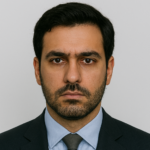
During the opening speech at WHX Tech 2025, Dr. Amin Al Ameeri, assistant undersecretary for the Health Regulation Sector at the Ministry of Health and Prevention (MoHAP), shared insights on the impressive progress in both healthcare and AI. “Our achievements surpass the anticipations of numerous countries. With our forward-thinking leadership, we’re committed to being at the forefront,” he stated.
Explore more: UAE’s healthcare transformation through AI, robotics, and data
A key aspect of this transition is the establishment of an interconnected healthcare system. The UAE operates as a cohesive health ecosystem, which includes entities like the Abu Dhabi Department of Health (DoH), Dubai Health Authority (DHA), and the Sharjah Health Authority; all coordinated under the MoHAP umbrella. National initiatives derive from broad consultations among government and private sector stakeholders, ensuring that major decisions align with the comprehensive needs of the healthcare ecosystem.
Key milestones in the UAE’s healthcare AI journey
- National health data integration: The interconnected platforms Riayah, NABIDH, and Malaffi create a cohesive national health information network.
- AI-driven disease forecasting and prevention: Public health efforts are increasingly proactive, tapping into AI for trend analysis and risk assessment.
- Innovative organ donation system: The Hayat platform, a regional leader in deceased donor registrations, is now enhanced with AI for fair organ matching.
- Advanced diagnostic solutions: BioSign offers precise, rapid diagnostics from blood samples, providing results in mere seconds using AI technology.
- Built-in security and trust: AI tools like NABIDH’s privacy safeguards are crucial in protecting over 9 million health records in real time.
Connecting through data: The significance of Riayah
A cornerstone of the UAE’s digital health strategy, Riayah is a national health data platform that consolidates medical records nationwide. The name “Riayah,” meaning “care,” reflects its mission to unify data from MoHAP, DHA, and DoH, enabling healthcare providers to access a patient’s complete medical history, no matter where they are located.
“With Riayah, each patient boasts a single, comprehensive file accessible across the UAE,” Dr. Al Ameeri noted. “Patients moving from Ras Al Khaimah to Dubai enable physicians to securely retrieve their full medical history, provided the patient consents.”
This results in a streamlined healthcare process: eliminating redundant tests, expediting treatment, and enhancing safety, especially during emergencies. “If a patient is incapacitated, doctors can access their files, prevent contraindications, and deliver faster, safer care,” Dr. Al Ameeri stated. “Time conserved translates to lives saved. That’s the tangible impact of this system.”
Furthermore, Riayah serves as the data backbone for national AI applications. With quality unified data, AI algorithms can provide more precise insights, improving care quality and operational efficiency. “If the underlying data isn’t accurate or complete, any AI-based recommendations will be flawed. That’s why ensuring data integrity has been our priority,” Dr. Al Ameeri emphasized.
AI models utilizing Riayah are now employed in predicting health trends, forestalling disease outbreaks, and enhancing health outcomes for both Emiratis and other residents.
Hayat: A significant advancement in organ transplantation
Another groundbreaking initiative is Hayat, a smart platform for managing organ donations and transplants. Launched on January 27, 2020, under the guidance of Sheikh Mohammed, Vice President and Prime Minister of the UAE and Ruler of Dubai, Hayat allows any UAE resident to register as an organ donor in less than a minute.
Since its launch, the platform has delivered notable outcomes:
- 11.6 deceased donors per million people
- 8 heart transplants successfully completed
- Hundreds of kidney, liver, and lung transplants conducted
This positions the UAE as a leader in organ transplant coordination within the Middle East.
The future of Hayat involves AI integration, which will facilitate the matching of donor organs to the most critical and compatible patients, irrespective of nationality, ensuring that transplant decisions are dictated solely by medical need and urgency. This approach not only hastens crucial decision-making but also boosts fairness and transparency.
BioSign and the emergence of AI-enhanced diagnostics
Additionally, the UAE is gaining attention with BioSign, an AI-based biometric health system introduced in February 2025 that is nearing its final testing phase. This innovative system utilizes just a few drops of blood to deliver lab-quality diagnostic results, including Hemoglobin A1c and cholesterol levels, achieving over 94 percent accuracy in under 50 seconds.
Expected to be universally launched by the end of 2025, BioSign represents a breakthrough in real-time diagnostics, especially beneficial in remote or high-demand care environments.
Simultaneously, AI is being harnessed for strategic healthcare planning, identifying needs for additional hospitals or specialized services. MoHAP is also rolling out a national physician licensing system that allows doctors registered in one emirate to practice throughout the country, thus enhancing flexibility in the workforce.
AI is not just impacting care delivery; it also plays a role in governance and performance evaluation. The UAE is aligning its regulations with global health authorities such as the WHO, FDA, EMA, NHRA, and Australia’s TGA, ensuring compliance and interoperability on an international scale.
Significant achievements in 2025: A milestone year for AI in healthcare
The year 2025 has already showcased significant advancements in the UAE’s AI healthcare initiatives, as highlighted by global AI health advisor Dr. Harvey Castro, MD, who serves as an advisor on AI and healthcare to the Singapore Government:
- Integrated AI-ready health data framework: The UAE has completed the in-depth integration of Riayati, Malaffi, and NABIDH, allowing clinicians to access and analyze patient data efficiently.
- Real-time privacy monitoring: In April 2025, DHA integrated AI into NABIDH to track data access behaviors, ensuring the protection of over 9 million records—an unprecedented initiative in the region.
- Scalable precision and preventive AI: Abu Dhabi’s Malaffi has amassed 3.5 billion clinical records spanning 12.7 million unique patients, providing valuable data for AI-driven risk analysis, pharmacogenomics, and radiology.
- AI in medical imaging: M42’s AIRIS-TB platform has published one of the largest real-world AI studies on tuberculosis, reviewing over 1 million chest X-rays with an AUC of 98.5 percent, effectively automating 80 percent of readings without any false negatives.
- Clinical large language model implementation: Med42-v2.0, a large language model for healthcare developed in the UAE, scored 87.3 percent on USMLE-style assessments, outperforming GPT-3.5 and recording over 8,200 downloads—indicative of its swift adoption.
- Operational AI in patient access: In April 2025, DHA implemented NLP-powered analytics in its contact center, employing speech and text recognition to improve service quality and efficiency.
The role of MoHAP: Leading the national AI strategy
MoHAP plays a pivotal role in promoting AI within the healthcare realm. Its Artificial Intelligence Office is steering the implementation of cutting-edge AI technologies, including natural language processing (NLP), generative AI, and computer vision, on platforms like SAS Viya, ensuring that they correspond to clinical goals and national quality benchmarks.
Interoperability is another priority spearheaded by MoHAP. By overseeing the integration of Riayati with Malaffi and NABIDH through FHIR-based architecture, MoHAP has laid a secure and standardized foundation for AI application.
Additionally, through platforms such as Enayati, MoHAP leverages AI to monitor health indicators and forecast risks for at-risk populations. The ministry also focuses on workforce development by collaborating with emirate authorities and international partners to expand validated AI pilot projects and ensure that the workforce acquires essential digital competencies.
A people-first approach: The UAE’s guiding principle
Despite rapid advancements in digitalization, the UAE’s approach remains distinctly human-focused.
“The UAE is not merely embracing AI; we are defining the future of how AI will enhance human welfare in healthcare,” Dr. Al Ameeri stated. “We are dedicated to utilizing technology not only for treatment but also for prediction, prevention, and protection. The individual is central to all our efforts.”
With a definitive national vision, advanced digital infrastructure, and a commitment to ethical AI practices, the UAE has progressed from modernizing its health system to becoming a global leader in AI-driven healthcare.