Image: Supplied
Gilead is committed to aligning its research and development efforts with local health priorities in the Middle East, ranging from CAR T-cell therapy access to supporting HIV education initiatives.
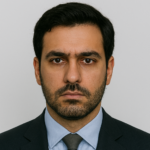
In this interview, Vítor Papão, General Manager for the Middle East, Russia, and Türkiye at Gilead Sciences, discusses the company’s recent collaborations in the UAE, the evolving importance of public-private partnerships in healthcare, and how technological advancements and policy reforms are changing patient care across the region.
What can you tell us about the newly signed memoranda of understanding (MoUs) between Gilead Sciences and the Abu Dhabi Department of Health? What is the strategic vision behind these agreements and what do they aim to accomplish?
These agreements highlight our joint commitment with Abu Dhabi to enhance public health in vital areas, particularly in virology and cutting-edge cancer therapies, such as CAR T-cell treatments.
Essentially, the MoUs are designed to bolster local clinical research capabilities, expand access to innovative therapies, and speed up early diagnosis through data-driven methods. They align perfectly with Abu Dhabi’s goal of becoming a regional center for medical innovation, representing a natural continuation of our longstanding partnerships with health authorities in the UAE, including our collaboration with MOHAP on the MAAK Access Program since 2015.
Gilead has a strong history of advocating for public-private partnerships. How do you view the impact of such collaborations on speeding up medical research and innovation in the region?
Public-private partnerships are crucial for promoting advancement—especially in terms of building research infrastructure, enhancing readiness for clinical trials, and improving access to innovative solutions. For the past ten years, we have partnered with hospitals and public health authorities throughout the UAE, Saudi Arabia, and Kuwait to deliver advanced treatments to patients more swiftly.
For example, in Saudi Arabia, our partnerships with the National Guard, East Jeddah Hospital, and King Faisal Specialist Hospital have notably expanded research efforts in virology and cell therapy. These collaborations not only shorten timelines but also create sustainable platforms for long-term enhancements in healthcare delivery.
What role does Abu Dhabi—and the UAE more broadly—play within Gilead’s strategy for advanced healthcare and clinical research?
The UAE significantly contributes to Gilead’s regional strategy, providing a unique environment characterized by progressive regulation, advanced digital capabilities, and a strong inclination towards innovation. These circumstances have facilitated our close cooperation with national institutions on initiatives that directly align with public health needs.
Our ongoing partnership with the Abu Dhabi Department of Health has grown into a broader collaboration with the Abu Dhabi Public Health Centre (ADPHC), concentrating on improving outcomes related to blood-borne diseases such as hepatitis B, hepatitis C, and HIV. This latest MoU specifies cooperation areas, including public awareness campaigns, prevention strategies, and the creation of more integrated care pathways.
Gilead-led initiatives in the UAE focus on improving early diagnosis and follow-up through customized awareness campaigns and scalable screening solutions.
Abu Dhabi’s robust infrastructure and proactive policy environment enable us to pilot these efforts in a way that can set examples for broader regional strategies. Instead of merely adopting innovations, the UAE is helping to define new approaches to delivering infectious disease care—more proactively, equitably, and sustainably.
Can you elaborate on the therapeutic areas or diseases that are prioritized under these new initiatives?
We are concentrating on areas where scientific innovation addresses urgent needs—specifically, HIV, viral hepatitis, and oncology. In the realm of HIV, we have introduced 11 antiretroviral therapies in the region, along with community engagement initiatives like “Behind the Myths” and “Ana Faisal” in Saudi Arabia.
In the UAE, we have sponsored continuing medical education (CME) programs, including a CME-accredited training module on HIV Pre-Exposure Prophylaxis (PrEP) for frontline providers, and co-authored a regional call-to-action aimed at integrating PrEP into national healthcare frameworks.
This year, we hosted the 9th HIV Summit in Dubai, themed “Life beyond HIV: Your Role, Our Future.” The event gathered over 130 HIV experts, featuring workshops focused on managing complex cases and improving screening and linkage to care. These discussions helped to shape new priorities for advancing HIV treatment and prevention throughout the region.
Understanding patient perspectives is equally important. Through our “Patient Voice” initiative, created in collaboration with community advocates, we aim to promote more patient-centered care models and address stigma that hinders testing and ongoing care.
In oncology, our partnership with Kite Pharma is aimed at increasing access to CAR T-cell therapies. In the UAE, we are working with key research institutions to establish the infrastructure necessary for these cell-based treatments and to incorporate them into existing oncology and hematology care pathways.
For viral hepatitis, we have facilitated regional scientific exchanges through programs that connect hepatologists and public health specialists to share real-world experiences, data, and strategies for eliminating HBV, HCV, and HDV.
The knowledge gained from such gatherings informs our ongoing discussions with UAE authorities regarding surveillance, screening, and earlier diagnosis. We are also partnering with liver associations to develop a regional positioning statement on hepatitis delta to strengthen diagnostic protocols and enhance awareness.
Gilead is renowned worldwide for its pioneering antiviral treatments. How are your global capabilities and R&D initiatives being tailored to meet the specific needs of the Middle East market?
Tailoring our global expertise to the region starts with understanding local needs—where access, education, and system readiness can greatly differ. Gilead has introduced over 55 products in the region; globally, we aim to meet our goal set in 2019 of delivering over 10 transformative therapies by 2030. This includes expanding our pipeline for HIV and hepatitis and launching new treatments for oncology and inflammatory diseases.
Beyond pharmaceuticals, we invest in awareness and education initiatives, like “Ready to be Cured” for HCV, and projects such as HIV STAR, which trains healthcare providers across the UAE, Saudi Arabia, Bahrain, and Qatar to improve diagnosis and early care linkage. Our objective is to guarantee that innovations reach the patients who need them most.
From a policy standpoint, what measures do you consider crucial for further promoting innovation, speeding up regulatory approvals, and enhancing cross-border collaboration in healthcare within the region?
Policies can either accelerate or obstruct the translation of innovation into practical solutions. Fragmented regulatory frameworks continue to pose significant challenges, even when treatments are already approved in other jurisdictions.
A cohesive approach across the GCC could mitigate delays and foster shared infrastructure for clinical trials and real-world data aggregation.
Moreover, we must reassess HIV testing policies to align them better with real-life scenarios. Earlier this year, we co-hosted the HIV Screening and Linkage to Care (SLTC) workshop, convening stakeholders from throughout the Middle East to present a framework for incorporating HIV screening into emergency, antenatal, and premarital healthcare workflows while also exploring self-testing and legal reforms to simplify consent issues.
From a systemic perspective, the SLTC roadmap outlines actionable next steps: piloting automated testing in emergency departments, distributing home testing kits via pharmacies and NGOs, and standardizing referral pathways post-diagnosis.
These initiatives are grounded in reality, offering concrete solutions tailored to our region’s unique cultural and regulatory landscapes. By aligning policies with actual needs, we can create systems that not only deliver innovations but also sustain them.
What significance do emerging technologies such as AI, data analytics, and digital health platforms hold in Gilead’s vision for the region’s future?
Technology is already reshaping our operations. For instance, the “Ana Faisal” campaign utilized AI and digital narrative techniques to raise awareness about HIV.
We are also promoting digital health solutions for self-testing, treatment adherence, and remote healthcare, particularly for individuals living with chronic illnesses.
As governments enhance their data infrastructure and electronic health systems, the opportunity to leverage real-world evidence to guide healthcare is growing. For Gilead, the focus is not on technology for its own sake; it is about utilizing digital tools to extend reach, enable earlier interventions, and strengthen healthcare systems to be more interconnected and resilient.
Read: Insights on the ‘One Health’ agenda’s significance to the transformation of health in MENA