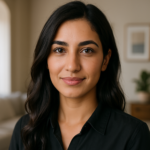
Lana Nusseibeh: The Abrahamic Agreements Reinforce Coexistence and Integration, Annexation of Palestinian Territories is a Red Line
Abu Dhabi – Sabri Saqr
The second edition of the “Heili Forum 2025” commenced in Abu Dhabi yesterday, themed “Resetting the Global Order: Trade, Technology, and Governance.” This event is organized by the Emirates Center for Strategic Studies and Research in collaboration with the Anwar Gargash Diplomatic Academy.
The forum, which spans two days, showcases the UAE’s role as an influential player in addressing global issues from local, regional, and international perspectives. This year, it has attracted more than 1,000 participants and 70 speakers from over 30 countries to discuss strategic transformations shaping the international system across politics, economy, and technology.
His Excellency Abdulla bin Touq Al Marri, Minister of Economy and Tourism, emphasized in his address that the UAE stands as a beacon of security and stability amid global turmoil, ranging from trade wars to climate crises, energy transitions, and commercial tensions, as well as declining public trust.
He pointed out that the UAE boasts a rich historical legacy deeply rooted in economic and business fields, having successfully bolstered its economic and investment presence globally to become a significant economic hub linking the East to the West and the North to the South. The UAE has emerged as one of the most dynamic and influential economic players worldwide, following a collaborative and comprehensive approach to economic diplomacy.
He further explained that economic diplomacy fundamentally seeks to bridge gaps and build trust, promoting open economic relations globally without limitations, and fostering partnerships across Africa, Asia, Europe, and the Americas, with foreign aid as a cornerstone.
Red Line
H.E. Lana Nusseibeh, Assistant Minister of Foreign Affairs for Political Affairs, stated during her speech: “Palestine remains at the heart of efforts to establish peace in the region.” She noted that the Abrahamic agreements were designed to emphasize the principles of coexistence and integration; thus, annexation of Palestinian territories is a red line. She asserted that the suffering of both peoples can only end through collective efforts aimed at achieving peace, which requires agreement on a two-state solution through negotiations.
She added: “The assumptions that once served as fundamental pillars of the international order are no longer valid. Standing still during uncertain times does not bring security; rather, it exposes weakness and allows others to make decisions on your behalf.
Institutions have become weakened and rules are often violated, highlighting that the goal of resetting the global order is to reshape the international system that emerged post-World War II.”
She also mentioned that the discussions taking place at the Heili Forum strengthen the UAE’s soft power and influence by enabling the exchange of knowledge, cooperation, and comprehensive dialogue across various regions and sectors.
Crucial Stage
Dr. Sultan Al Naimi, Director General of the Emirates Center for Strategic Studies and Research, emphasized the significance of dialogue at this forum in transforming global disruptions into opportunities for cooperation, innovation, and growth.
He highlighted that the Heili Forum continues the strategic partnership with the Anwar Gargash Diplomatic Academy, aimed at bringing together officials, experts, and specialists under the Heili umbrella to discuss critical regional and international issues.
The choice of the name “Heili” underscores the rich cultural and intellectual depth of the UAE, which has been a hub for civilization, culture, and trade for thousands of years.
Humanitarian Diplomacy
Dr. Ebtesam Al Ketbi, founder and president of the Emirates Policy Center, noted during her participation in one of the forum sessions that through the Abrahamic agreements, the UAE has expanded its humanitarian diplomacy and utilized these agreements to deliver aid to Gaza.
She pointed out that Gulf countries have bolstered their international influence by transforming into financial and logistical centers, turning to middle powers for mediation and resolution of pivotal global issues.
Six Countries
Dr. Abdallah Hamdok, former Prime Minister of Sudan, during a session titled “Geopolitical Transformations: The Middle East,” remarked that the challenges in the Red Sea region illustrate the extent of regional interconnection.
Six countries share intertwined interests and crises, making any local issue affect everyone and necessitating a comprehensive, multifaceted response. He indicated that the Sudanese crisis is considered the largest humanitarian disaster in the world and emphasized that a solution requires a ceasefire under international supervision and support for inclusive internal dialogue.
Three Pillars
The forum consists of three primary pillars: geopolitical, geoeconomic, and geotechnological, aiming to provide insights into the current state of the international system and its strategic impacts.
The geopolitical pillar addresses major global shifts reshaping the foundations of the world system amid intensified competition among major powers, the rising influence of middle powers, ongoing conflicts, political polarization, and new partnership opportunities in a multipolar world.
The geoeconomic pillar discusses changes in the global economy and the challenges posed by fragmentation and protectionism in the era of globalization, highlighting opportunities for those capable of innovating and adapting to the evolving economic landscape.
The geotechnological pillar focuses on the impacts of modern technologies, artificial intelligence, and robotics on defining concepts of global power, national security, economic competitiveness, and geopolitical relations, with the goal of achieving technological development that contributes to global stability and enhances international cooperation.
The forum features a distinguished group of high-ranking officials, decision-makers, diplomats, experts, and thinkers from within the UAE and abroad who will offer enriched perspectives on current global issues and future trajectories.