A senior UAE official praised the country’s diplomatic and legal representatives for their “exceptional performance” at the International Court of Justice (ICJ).
Dr. Anwar Gargash, Diplomatic Advisor to the UAE President, stated that the Emirates are facing “false and flimsy accusations aimed more at media attention than substance.”
On Thursday, ICJ commenced public hearings regarding a case brought forth by the Sudanese Armed Forces against the UAE.
Gargash urged the “Sudanese military regime to understand that the primary objective should be achieving stability in Sudan by promptly ending this conflict.” He highlighted the importance of Sudan establishing “a political framework that maintains national unity and protects its citizens.”
What accusations did Sudan make?
The Sudanese Armed Forces claimed that the UAE had breached its duties under the Genocide Convention in relation to attacks by the Sudanese Rapid Support Forces and allied groups against the Masalit ethnic group in West Darfur.
As part of its case, Sudan requested provisional measures under the Convention on the Prevention and Punishment of the Crime of Genocide.
What was the UAE’s rebuttal?
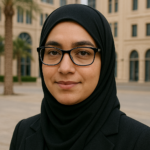
The UAE rejected any involvement in escalating the conflict, dismissing Sudan’s claims as “entire fabrications.” Reem Ketait, Deputy Assistant Minister for Political Affairs at the UAE Ministry of Foreign Affairs, addressed the ICJ, accusing Sudan of attempting to “divert attention from their own wrongdoings.”
While the UAE expresses solidarity with the Sudanese population, condemning acts of violence and advocating for accountability against offenders, Ketait reiterated that Sudan’s claims against the UAE are unfounded.
She emphasized that the proceedings at the ICJ do not pertain to the UAE’s legal responsibilities under the Genocide Convention but rather reflect Sudan’s misappropriation of the court to “distract from their own roles” in the ongoing conflict.
A key aspect of the UAE’s defense was the assertion of lack of jurisdiction. Ketait pointed out the UAE’s reservation to Article IX of the Genocide Convention, framing it as a “valid exercise of state sovereignty.” She remarked that Sudan’s case attempts to “bypass state consent,” which is fundamental to international law.
Ketait highlighted the UAE’s contributions to Sudan, which include over $4 billion in investments, $600 million in assistance, and the establishment of field hospitals in Chad and South Sudan. She criticized Sudan for declining the UAE’s offer to create a field hospital in Port Sudan.
Furthermore, she asserted that the UAE has not supplied weapons or related materials to either faction since April 2023.
She outlined that the UAE’s legal team would present further arguments focusing on the jurisdictional issues, countering Sudan’s legal claims, and the lack of evidence backing those allegations.
(Based on information from WAM)