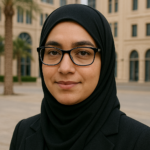
The UAE continues to strengthen its position in shaping the future through proactive visions and global initiatives that bring together future creators, thinkers, and experts from various vital sectors, emphasized Ohood Khalfan Al Roumi, Minister of State for Government Development and the Future.
In her address during the Global Councils Meetings in Dubai, she noted that numerous future creators, innovators, experts, and entrepreneurs would take part in 37 councils across key sectors crucial for global development. Al Roumi highlighted the strong passion in the UAE for shaping the future and the significant interest in such vital platforms that discuss future developments.
Major Transformations
She added that we are meeting today at a pivotal historic moment where humanity faces crossroads marked by rapid fundamental changes, blurring timelines, merging challenges, and confronting unprecedented questions imposed by scientific advancement and a technological race. With these rapid transformations, we are witnessing a global crisis of trust, as recent studies indicate that confidence in institutions within advanced economies has dropped to 49%, the lowest since tracking began.
Models of Cooperation
Al Roumi continued by stating that this reality necessitates a reevaluation of global cooperation models and emphasizes the need for designing a brighter, more sustainable future for humanity.
She pointed out that global transformations are driven by three main pathways. The first is the rising and expanding new digital wave, explaining that 70% of the new value added in the coming decade will hinge on business models driven by digital technologies.
Furthermore, she noted that artificial intelligence is a top priority in the UAE, now emerging as a driving developmental force capable of contributing up to $7 trillion to the global GDP by 2030. However, this requires people-centered design, shared global ethical standards and governance, and new skills for all communities to achieve optimal outcomes.
With the growing reach of technology and artificial intelligence, cyber tensions are also on the rise, as global costs from cyber threats are expected to reach approximately $20 trillion by 2030. This underscores that resilience, trust, and secure digital infrastructure are fundamental pillars for the future.
She mentioned that yesterday, the annual cybersecurity meetings were held as part of this year’s Global Councils Meetings agenda.
Differing Priorities of Future Generations
Al Roumi remarked that we are now faced with new generations raised in a digital world, surrounded by industrial motivations, fundamentally differing mindsets, and future priorities that prioritize over 70% justice, human empathy, impact, and participation in national and global decision-making.
She stated that one cannot design the future without considering the younger generations. Readiness for the next phase requires understanding young people’s mindsets and shaping future decisions with them. The UAE has a unique experience in involving youth in decision-making through the Ministry of Youth, the integrated youth agenda, and youth participatory councils in shaping the nation’s future.
Redefining Resilience
Al Roumi noted that the speed of current developments exceeds the capabilities of existing systems and models to respond and interact with changes, be they climatic, political, economic, or technological.
Challenges
She pointed out that the increasing complexity of future challenges presents undeniable realities to societies. For instance, annual losses from floods to urban and environmental assets are estimated in billions of dollars, while today, there are new opportunities offered by artificial intelligence and data to develop new models of resilience and proactivity.
In moving forward, we need to redefine resilience with a renewed perspective, viewing it as a continuously evolving sustainable approach and a strategic foundation essential for future readiness, which is a shared responsibility among governments, businesses, and communities.