Life
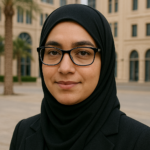
Malak Abu Qaoud, the head of the ICD Brookfield Place Arts Programme, shares insights on how the property is transforming its spaces, her enthusiasm for the arts, and her commitment to education that integrates culture and community.
Malak Abu Qaoud, Director of ICD Brookfield Place Arts Programme. Photography: Omar Sha3
Can you describe your morning routine in the first half hour after waking up?
I typically wake up around 7 AM each day. I do my best to avoid checking notifications immediately, as it tends to heighten my anxiety about the day ahead. On some mornings, I get up earlier for a stroll along the beach boardwalk or squeeze in a workout at one of the gyms located in ICD Brookfield Place, which features excellent facilities. After that, I enjoy a cup of coffee while having a catch-up call with a long-distance friend and colleague to discuss work-related updates and brainstorm ideas for future projects.
Can you share your professional journey with us?
I’ve been involved in work since childhood, with my first job being the narration of educational computer games for children at the age of nine, a role I held for about seven years while attending school. Living in Montreal, I was eager to seek out side projects, internships, and extracurricular activities. I participated in a student-led Palestinian human rights association at university, collaborating with artists to raise funds for various causes. This involvement led me to join an art consulting and production agency, where I eventually secured a full-time position. During my tenure there, I gained valuable experience working closely with artists, producing exhibitions, and fostering community engagement. When I came on board at ICD Brookfield Place, I applied much of what I had internalized throughout my career. Today, I oversee the Arts & Events programme in the building, where my team and I curate public exhibitions and manage cultural placemaking initiatives within ICD Brookfield Place.
Since your appointment, how has the arts programme at ICD Brookfield Place changed, and what are your future plans for it?
I arrived at ICD Brookfield Place at its launch, allowing me to define the identity of the arts programme without constraints of a pre-existing reputation. We began with modest undertakings but placed significant emphasis on our curation process. Our central strategy has been to support the local creative community, showcase their work in public spaces, and establish a network that bridges artists, tenants, and the community. We strive to produce exhibitions accessible to all, continually pushing boundaries with our messaging and themes. Our goal is to address progressive social issues and inspire change. In the future, I hope to broaden our arts programme beyond the confines of the building and establish partnerships with regional institutions to support artist residencies and grants.
Photography: Seeing Things
What distinguishes it from other art spaces in the UAE? How do you tailor your offerings to foster a solid regional identity?
First and foremost, ICD Brookfield Place is a commercial building situated in a financial district. Our arts programme functions differently from traditional white-cube galleries, as we operate in a highly visible public environment. We unite individuals from various backgrounds in one location, making us an essential part of the community. Our approach promotes collaboration and inclusivity, resulting in a unique fusion of interests and expertise, leading to exciting outcomes. We do not conform to a specific art institutional framework, which empowers us to innovate and adapt according to public needs.
“Public art should be welcoming, encouraging engagement in shared spaces that everyone can enjoy.”
How do you perceive the role of the ICD Brookfield Place Arts Programme within the broader cultural context?
ICD Brookfield Place serves as a public space – we prioritize inclusivity. Our aim is to curate exhibitions that are culturally accessible, inviting everyone to participate in meaningful conversations. We aspire to set new standards for what public art outside traditional institutions can achieve in the city. Integrating art into communal spaces fosters engaging environments, enabling the public to create genuine connections with their surroundings. This way, individuals can develop an appreciation for their environment. Public art should feel inviting, sparking interest in shared spaces frequented by diverse groups. Observing people’s reactions to our installations brings immense joy and excitement.
How have your early experiences with art influenced your vision as Director?
Growing up, my older sisters pursued fine arts in college, which greatly inspired me. My father previously engaged in painting, allowing me to thrive in a creatively stimulating environment. My parents encouraged me to express my creativity at home and school, instilling the confidence I needed to follow my instincts in programming exhibitions. I rely on my intuition to guide my choices, embracing exploration and risk-taking – a blessing that yields positive outcomes most of the time, while also imparting valuable lessons when things don’t go as planned.
What significant transformations have you observed in the art scene over the past five years? Have those changes influenced your approach to programming?
I’ve noticed that many exhibitions tend to become monotonous and uninspiring; it’s rare for me to leave feeling wanting more. This sensation often occurs with the more experimental shows. At ICD Brookfield Place, I make it a point to delve into diverse art mediums, such as scenography, design, musical programming, utilizing unconventional areas of the building, and communicating thought-provoking messages. Keeping things innovative is crucial to maintain excitement for what’s coming next.
What upcoming events are you particularly looking forward to this year?
Definitely! Our current exhibition, “Le Miroir,” features artist Miles Greenberg and consists of two acts— a multi-channel film. The first act was a long-duration performance captured at a historical site in Marrakech as part of the 1-54 Art Fair, while ACT II took place in the UAE desert shortly thereafter. The result is stunning and delves deep into themes of human duality and emotional transformation.
How do you maintain an open mind towards discovering new creatives? Are there particular individuals or events that have influenced your curatorial perspective?
Staying alert and current with trends or upcoming exhibitions can be challenging. Still, I usually discover new creatives through social media, recommendations from fellow artists, or by exploring different cities. There is remarkable talent in Jordan and Palestine, making it a fascinating region. When I encounter a creative individual, I strive to incorporate them into our program or connect them with institutions or galleries in the UAE to help advance their careers. Several key players have been instrumental in the programme’s growth since its inception, and we regularly collaborate.
What factors have been important in nurturing an authentic community around your projects?
Ultimately, it comes down to being true to myself and the programme. My passion for what I do is genuine, reflecting my enjoyment in the role, which resonates with others. People can easily discern when something feels contrived or disingenuous. Building a community takes time, but eventually, it evolves organically, leading to recognition and appreciation for our hard work. After five years, I could not have envisioned such rapid growth for the programme!
This relates to The Design Issue – what design has left a lasting impression on you?
Having studied interior architecture, I have always been attentive to my environment. This sensitivity likely informs my interest in the interaction between humans and their spaces, as well as how space interacts with art. A significant design memory from my youth involves my grandparents’ historic home in Jerusalem; I was fascinated by the cultural preservation of architecture. My passion lies in safeguarding cultural identity and exploring how architectural elements narrate stories of time and place.
For more insights on luxury lifestyle, news, fashion, and beauty follow local media on their social channels.
Images: Supplied