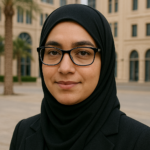
Nada Al Ammari has experienced a life-changing pancreas and kidney transplant under the UAE’s Hayat program, marking a significant turning point in her health journey.
During the Abu Dhabi Global Health Week, at a session titled “The New Era of Organ Transplantation,” Al Ammari shared her heartfelt transition from illness to recovery, highlighting that the medical advancements discussed are not merely about innovation; they truly transform lives.
“What is happening today goes beyond reshaping medical futures,” she addressed the audience and panelists. “It fundamentally alters the lives of individuals like myself. I am deeply thankful and will remain so forever.”
Stay informed with the latest updates.
Her narrative was more than uplifting; it grounded the event in reality, serving as a poignant reminder that each transplant represents a life restored.
“I am neither a policy maker nor a doctor, yet my life has dramatically improved thanks to the transplant. More important than the transplant itself is knowing it came from selfless individuals, including my brother, who generously donated his kidney. This illustrates the true nature of love—derived from courage and the desire for life to prevail,” shared the 38-year-old Emirati.
Community Support
Dr. Rashed Al Suwaidi, the Director-General of Abu Dhabi Public Health Centre, emphasized the importance of sharing genuine stories from donors, recipients, and their families to shift perspectives and bolster community support for organ donation.
He noted that fostering public understanding in a culturally sensitive manner entails a multifaceted strategy that respects various beliefs, customs, and concerns.
According to Al Suwaidi, effective outreach and education must focus on community-centric approaches. This can be achieved through customized messaging that takes into account the values, traditions, and languages of different communities.
“There are still misconceptions, and trusted leaders must be involved in dispelling them,” he said, adding that “the UAE has made significant strides in kidney and liver transplants.”
Healthcare professionals should be equipped to engage in delicate discussions, and each transplant facility ought to maintain a diverse team dedicated to organ donation to enhance and promote the donor registry.
Dr. Ali Abdul Kareem Al Obaidli, Chairman of the UAE National Transplant Committee, stated, “Trust from the public can be achieved through complete transparency. Over 55 nationalities have either donated organs or received transplants. Our regulations ensure equality for all, irrespective of ethnicity, religion, or socioeconomic status. Therefore, inclusivity and building a robust foundation is vital.”
He emphasized collaboration: “This intricate field necessitates the involvement of the medical community, logistics, transportation, and society at large, as kindness often prevails among people.”
‘On Par With the Best Globally’
Last year, the UAE saw 110 families consent to organ donations, facilitating 356 life-saving transplants. The nation boasts eight transplant centers, providing 12 varieties of organ transplants.
Since the introduction of organ transplant legislation in the UAE in 2016, medical professionals have been actively encouraging individuals to enroll and commit to organ donation after death.
According to UAE guidelines, potential donors must have explicitly expressed their willingness to donate through formal registration and verification processes.
Dr. Georges-Pascal Haber, CEO of Cleveland Clinic Abu Dhabi, remarked, “Evaluating the quality and outcomes of transplants is equally important. Our success in Abu Dhabi matches, if not surpasses, leading medical centers in Europe and the US. Our continuous innovation allows us to improve, attracting skilled professionals. We can perform all transplant types conducted globally.”
Nandini Sircar
Nandini Sircar is passionate about education, space, and women’s storytelling. She perceives the world through this lens.